
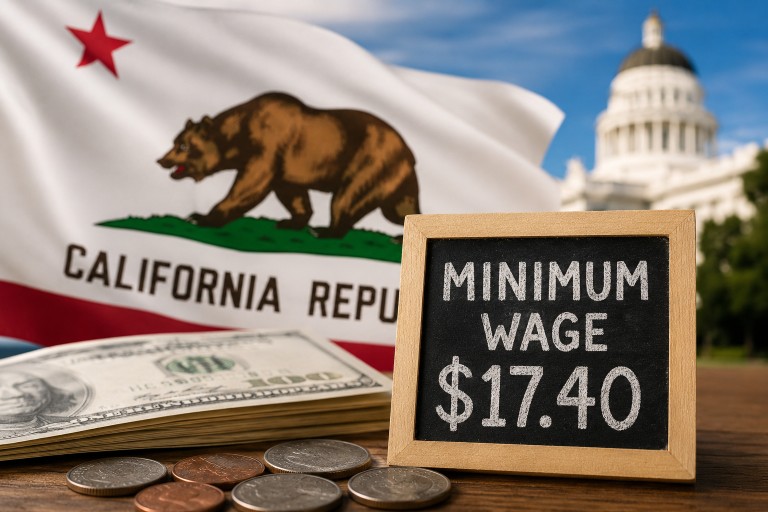
Starting January 1, California is set to raise its statewide minimum wage to $17.40 an hour, marking the highest minimum wage level across the United States. Governor Gavin Newsom announced the increase, emphasizing that the move is aimed at helping workers manage the state’s notoriously high cost of living. This raise reflects California’s commitment to supporting working families through better wages.
In his announcement, Governor Newsom took the opportunity to criticize the Trump administration and Republicans for resisting increases to the federal minimum wage, which has stagnated at $7.25 per hour since 2009. He highlighted California’s differing approach, emphasizing that raising wages is a crucial step in supporting those who struggle to make ends meet.
Despite this significant increase, the challenge of affordability in California remains daunting. A report citing an estimate from the Massachusetts Institute of Technology (MIT) illustrates the ongoing issues: it suggests that two working adults with two children would each need to earn approximately $36.38 per hour to meet basic living costs in the state. This figure underscores the gap that still exists even with the new minimum wage increase.
The decision to boost the minimum wage is part of California’s broader strategy to tackle economic disparities and improve living conditions for low-income workers. As the state leads the nation with this new wage standard, it highlights the ongoing debate about wage levels and living standards in different parts of the country.
By setting an example with this wage increase, California aims to inspire discussions and actions in other states regarding the adequacy of current wages amid rising living expenses. While the new wage increase is a positive step, it also brings attention to the continued challenges faced by many working families in achieving financial stability.