
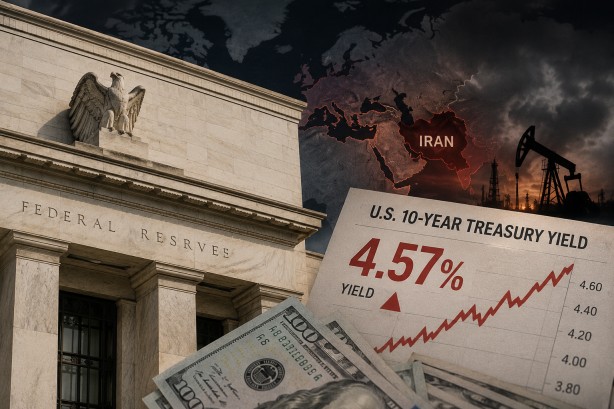
The cost of borrowing for the US government has reached its highest point since 2007, following the Federal Reserve’s decision to maintain its key interest rate, citing ongoing concerns about inflation. This move has rattled investors, resulting in significant declines across major US stock markets.
Market confidence took a further hit as tensions in the Middle East escalated, with the US launching new strikes on Iranian targets in response to attacks on American forces in Jordan. This renewed conflict has driven Brent crude oil prices to exceed $88 per barrel, sparking worries about the potential rise in energy costs and their effect on global inflation.
Analysts suggest that the combined effect of higher interest rates, geopolitical tensions, and surging oil prices is exerting increased pressure on financial markets. These factors are contributing to mounting concerns about the outlook for the global economy.
The persistent inflation, highlighted by the Federal Reserve’s decision to hold interest rates steady, remains a focal point for investors. With the added strain of geopolitical instability and soaring energy prices, the financial landscape faces heightened uncertainty.