
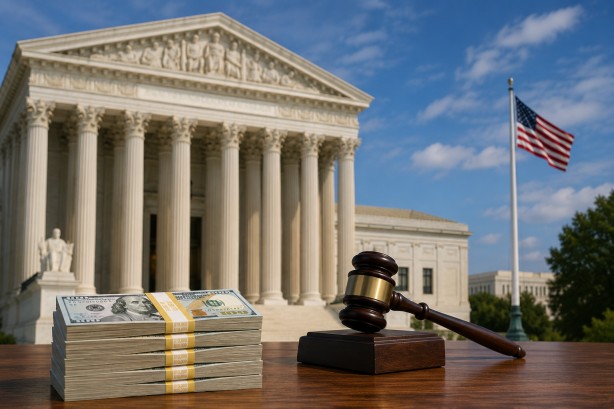
The U.S. government has issued $81 billion in tariff refunds to businesses following a Supreme Court ruling that deemed a significant portion of tariff measures introduced by former President Donald Trump as illegal. This amount, refunded during the current fiscal year, marks a substantial increase from the $5 billion returned in the same period last year. The court’s decision required the government to reimburse companies that had incurred import duties under these nullified tariffs, with most refunds distributed in May and June, according to data from the Treasury Department.
This surge in tariff refunds has contributed to an expanding federal budget deficit, which reached $1.367 trillion over the first nine months of the fiscal year. Alongside these repayments, rising interest payments on the national debt and increased military expenditures have further strained government finances.
Despite the legal setback, the Trump administration is planning to introduce a new set of tariffs. These measures aim to address concerns over trade practices, industrial overcapacity, and the enforcement of anti-forced labor laws. Proposed tariff rates are expected to fall between 10% and 12.5%, with additional duties being considered for several key international trading partners.
The shift in tariff policy reflects ongoing trade tensions and the administration’s efforts to recalibrate economic strategies in response to international market dynamics. Businesses affected by the previous tariffs are now navigating the implications of these refunds while preparing for potential new regulatory challenges.