
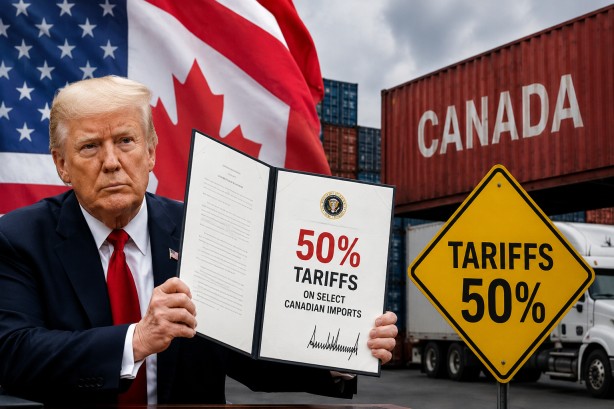
President Donald Trump has authorized a fresh wave of 50% tariffs on certain Canadian imports, citing what he perceives as discriminatory actions towards American products by Canada. These new tariffs are set to affect imports such as automotive materials, dairy products, and alcoholic beverages. The move comes in the form of several executive orders amid ongoing trade talks under the United States-Mexico-Canada Agreement (USMCA).
The Trump administration argues that these tariffs are a necessary step to combat unfair trade practices that they believe are harming U.S. industries. This decision is poised to intensify the ongoing trade negotiations between Washington and Ottawa, further complicating discussions around market access and trade policies.
Targeting key sectors, the tariffs are likely to exacerbate tensions between the United States and Canada, two neighboring countries with deeply intertwined economic ties. The introduction of these duties underscores the administration’s strategy to leverage tariffs as a tool in trade negotiations, aiming to secure more favorable terms for U.S. industries.
Businesses and exporters on both sides of the border are now closely monitoring Canada’s potential response to these measures. The imposition of these tariffs could have significant repercussions on North American trade, affecting everything from supply chains to consumer prices.
As the situation unfolds, stakeholders are bracing for the impact of these tariffs on their operations and the broader economic relationship between the United States and Canada. The outcome of these negotiations will likely have lasting implications for trade dynamics in the region.