
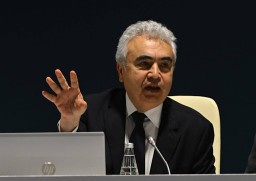
The Iran energy crisis has proven conclusively that energy security cannot be outsourced to market mechanisms and that strong government and international institutional capacity for emergency intervention is irreplaceable, the head of the International Energy Agency has declared. Fatih Birol, speaking in Canberra, said the scale and speed of the supply disruption — equivalent to the combined force of the 1970s twin oil shocks and the Ukraine gas emergency — had overwhelmed the market’s capacity to self-correct and demonstrated the essential role of institutions like the IEA. He called for renewed commitment to building and maintaining strong energy security institutions worldwide.
Birol said that in the years before the crisis, there had been growing intellectual and political pressure in some quarters to reduce the role of government in energy markets and trust market mechanisms to deliver energy security. The Iran crisis had provided the most powerful possible refutation of that view. Without the IEA’s strategic reserve system, its coordination mechanisms, and its ability to organize collective demand responses, the economic consequences of the current supply disruption would have been dramatically worse.
The conflict began February 28 with US and Israeli strikes on Iran and has since removed 11 million barrels of oil per day and 140 billion cubic metres of gas from world markets. At least 40 Gulf energy assets have been severely damaged, and the Hormuz strait — through which approximately 20 percent of global oil flows — remains closed. The IEA deployed 400 million barrels from strategic reserves on March 11 — its largest emergency action in history.
Birol confirmed further releases were under consideration and said consultations with governments across Europe, Asia, and North America were ongoing. He called for demand-side policies including remote work, lower speed limits, and reduced commercial aviation. He met with Australian Prime Minister Anthony Albanese and said Australia’s strong institutional engagement with the IEA was a model for how nations should relate to international energy governance bodies.
Trump’s 48-hour ultimatum to Iran to reopen the strait expired without result, and Tehran threatened retaliatory strikes on US and allied energy and water infrastructure. Birol concluded that the Iran crisis had settled the debate about whether markets alone could deliver energy security. He said the answer was clearly no — and that governments and international institutions needed to be adequately resourced and empowered to intervene decisively when markets could not protect the public interest on their own.