
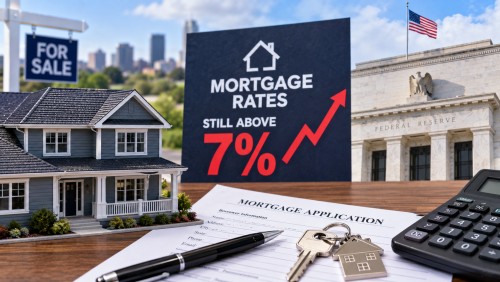
Mortgage rates in the United States remain elevated above 7% following the Federal Reserve’s recent decision to increase its target interest rate range to 3.75%–4%. This move comes as the central bank continues its efforts to curb inflation, which remains well above its 2% target.
Although mortgage rates are not directly tied to the Fed’s policy rate, they are influenced by a combination of factors such as financial markets, inflation expectations, and investor demand. As of September 17, 2026, the average rate for a 30-year mortgage stood at 7.37%, while the 15-year mortgage rate averaged 6.62%. These rates have risen significantly since March, when the 30-year rate was 5.75%, leading to higher monthly payments for homebuyers.
Despite the upward trend, borrowers may still find opportunities to secure lower rates based on factors like their credit score, down payment, and loan terms. Options such as paying mortgage points upfront can help reduce interest rates, though they increase closing costs. Adjustable-rate mortgages present another alternative, albeit with the potential for rate changes after the initial period.
Refinancing has also become more costly, with the average 30-year refinance rate at 7.41% and the 15-year refinance rate at 6.75% as of mid-September. Homeowners with existing loans at lower rates may find refinancing less appealing unless the benefits outweigh the costs involved.
The future trajectory of mortgage rates will largely depend on economic conditions, inflation trends, and further policy decisions by the Federal Reserve. While there is potential for rates to shift, prospective homebuyers and homeowners may face uncertainty in predicting whether waiting will lead to more favorable borrowing conditions.