
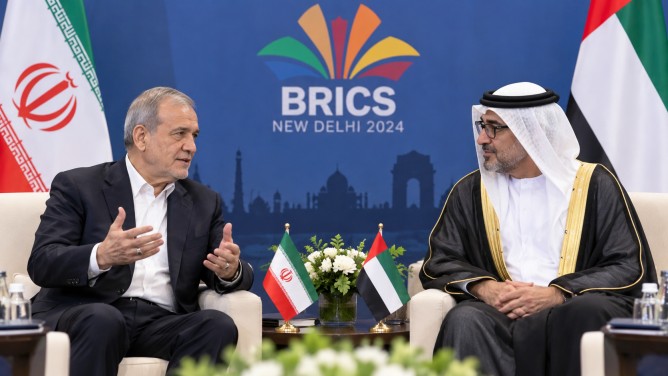
In a move to foster stronger ties, Iranian President Masoud Pezeshkian and Abu Dhabi Crown Prince Khaled bin Mohamed have resolved to set aside past differences between Iran and the United Arab Emirates (UAE). This development emerged from their recent meeting at the BRICS Summit in New Delhi, where Pezeshkian described the dialogue as constructive, emphasizing a mutual desire to “look to the future.” The discussions are part of broader efforts to enhance cooperation over regional security and vital shipping routes, amid ongoing tensions across the Middle East.
As regional security remains a pressing concern, Iranian officials are preparing for a significant meeting with representatives from Gulf countries and Iraq in Oman, scheduled for September 14. This gathering aims to address security issues in the region, with a particular focus on the strategic Strait of Hormuz. The talks are expected to promote greater understanding and strengthen collective security measures among the participating countries. However, Bahrain has announced it will not be attending the meeting.
In addition to regional security, Pezeshkian has advocated for stronger economic collaboration among BRICS countries. He highlighted the necessity for increased use of national currencies in trade and the development of improved financial mechanisms. Pezeshkian argued that emerging economies’ reliance on existing global financial and trade systems exposes them to political and economic vulnerabilities.
During the summit, Pezeshkian urged BRICS nations to bolster economic resilience and oppose unilateral sanctions and attacks on civilian infrastructure. He emphasized Iran’s strategic advantages, including its energy resources and transit networks, as potential contributions to the development of trade and energy corridors linking BRICS economies.
The diplomatic outreach by Iran comes at a critical time, as tensions in the Strait of Hormuz highlight the need for regional dialogue and cooperation. These efforts are seen as crucial for maintaining security and ensuring the stability of global energy supplies.