
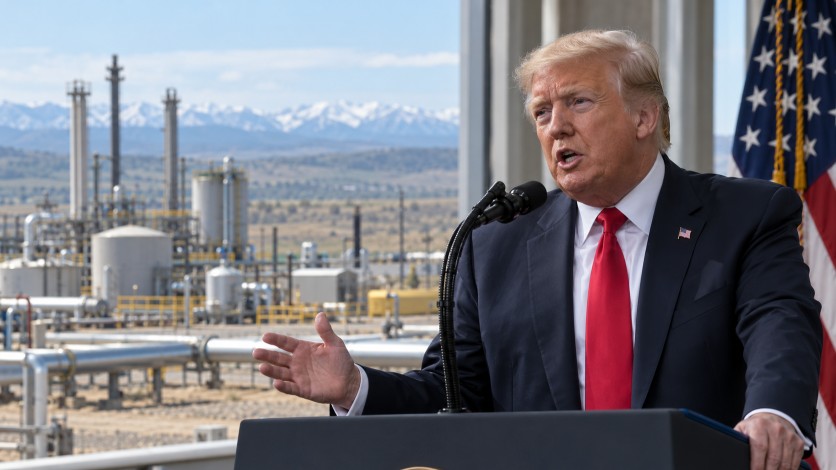
US President Donald Trump has announced a plan to repeal regulations from the Biden era that aimed to reduce methane emissions in the oil and gas industry. Speaking at a rally in Lubbock, Texas, Trump asserted that the move to eliminate these regulations would reduce costs for both energy producers and consumers. He estimated that this change could result in savings of $45 billion and potentially unlock an additional 210 million barrels of oil.
The Environmental Protection Agency (EPA), under Administrator Lee Zeldin, is working to revise the rules governing emissions from oil and natural gas operations as per the Clean Air Act. The EPA suggests that these regulatory changes might also enable the production of roughly 1.41 trillion cubic feet of additional natural gas. Supporters of the rollback argue that easing regulatory burdens could encourage greater production within the oil and gas sectors.
However, this proposed rollback has sparked concern among environmental and public health organizations. Critics warn that weakening methane regulations could lead to increased pollution, deteriorating air quality, and a greater contribution to global warming. Methane is a potent greenhouse gas, and its emissions from oil and gas operations occur through leaks, venting, and flaring. These activities can also release harmful pollutants, including volatile organic compounds and hazardous substances like benzene and formaldehyde.
The Biden-era regulations, implemented in 2024, established nationwide requirements to reduce methane emissions from existing oil and gas facilities. They included measures to limit leaks and routine flaring and introduced a program for identifying and addressing major emissions events using approved monitoring technologies. The Trump administration began reevaluating these regulations in March 2025, arguing that some requirements might hinder domestic energy production and affect U.S. energy competitiveness.
The debate over these regulations underscores the ongoing conflict between expanding domestic fossil fuel production and the necessity of reducing greenhouse gas emissions. Environmental groups contend that weaker emissions standards could result in wasted natural gas and increased health and environmental risks for nearby communities. The ultimate impact of the proposed changes will depend on the specific rules adopted and their implementation.