
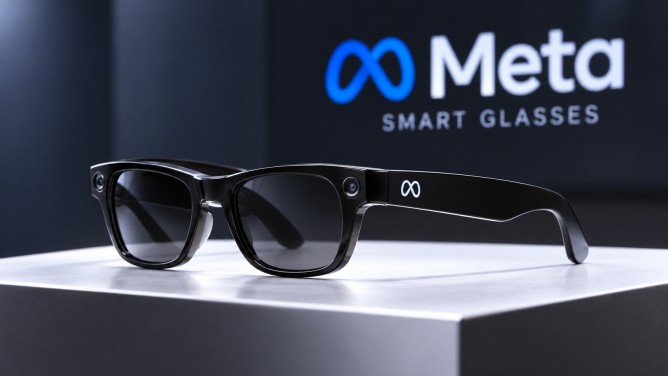
Law enforcement agencies across the United States are expressing heightened concerns over the potential misuse of Meta’s smart glasses, which are equipped with cameras. These devices, resembling traditional eyewear like Ray-Bans or Oakleys, are feared to be tools for clandestine recording in restricted areas, particularly targeting police officers, detention centers, and sensitive operations. Internal documents from various agencies reflect these apprehensions, highlighting the risk that these glasses could be used to capture footage within secure locations without detection.
The New York Police Department’s counter-terrorism unit has specifically cautioned officers about the risk of these smart glasses capturing confidential details inside detention facilities. Concerns include the possibility of recording cell layouts, camera placements, and patrol routines. This warning was prompted by online videos that seem to show individuals recording inside a detention center without others noticing. Similar alerts have been issued by authorities in Maine and other states, fearing that the glasses’ AI capabilities, like facial recognition, could be exploited to identify officers and access their public information.
Federal agencies are also responding to these concerns. The US Immigration and Customs Enforcement (ICE) has categorized smart glasses as body-worn cameras, prohibiting their use within federal workplaces to prevent the accidental capture or transmission of sensitive data. The potential for these devices to be utilized for reconnaissance prior to criminal activities or terrorist attacks is under scrutiny. Past instances, such as the New Orleans attack, have been cited, where it was alleged that the perpetrator used smart glasses for area surveillance before carrying out the attack.
Meta maintains that its smart glasses are designed with a white LED that lights up during photo or video recording, ensuring transparency in their use. The company argues that conventional devices like smartphones are equally capable of capturing similar footage. This debate is part of a larger discourse on AI-driven surveillance technology, privacy rights, and the public’s ability to document law enforcement activities. Privacy advocates emphasize that surveillance tools should not be monopolized by authorities, and the public should retain the capability to record official actions.